

Data updated · March 2026

Are forever chemicals in your drinking water?

Transparent map of PFAS forever chemicals in drinking water across the Czech Republic. Select an area on the map or search by region.

🔍
0 water supply areas shown, 2 exceed regulatory limits
Click a dot · Drag to pan
Ideal 0 ng/l
Detectable < 4 ng/l
Risk levels per studies ≥ 4 ng/l

Data source: Czech Ministry of Health

* GPS of the water supply is approximate only. We recommend searching by region and district, or by name.

* The map contains only water supply systems where Sum of 20 PFAS was measured in 2025/2026.

* Ideal values mean only the absence of these specific 20 PFAS. Some other compounds (e.g. TFA) are not yet monitored.

Regulatory limits for PFAS in drinking water
0 ng/l
2 ng/l
4 ng/l
100 ng/l
Ideal health goal
(MCLG) per US EPA
Drinking water limit
in Denmark
Limit derived from EFSA TWI
(4.4 ng/kg/week)
EU drinking water limit
(in force in CZ from Jan 12, 2026)

The EFSA TWI, US EPA MCLG and Danish limits all refer to the demonstrably harmful sum of 4 PFAS (PFOA, PFOS, PFNA, PFHxS).

The EU limit of 100 ng/l applies to a broader sum of 20 PFAS. However, newer studies confirm similar toxicity for other PFAS substances as well, so real health risk may be higher than these limits suggest.

🧪
Education

What are PFAS – forever chemicals?

PFAS are per- and polyfluoroalkyl substances. A group of thousands of man-made chemicals that do not break down in nature and persist in water, the food chain and our bodies for decades.

🔗
Why "forever"?
The carbon-fluorine bond is one of the strongest in organic chemistry. PFAS practically do not break down in nature, which is why we call them "forever chemicals" – they remain in the environment for centuries.
🏭
Where do they occur?
Most often in firefighting foams (AFFF), non-stick surfaces (Teflon), waterproof clothing, food packaging, cosmetics, polishes and cleaning products. Production has been going on since the 1950s.
⚠️
Bioaccumulation
PFAS accumulate in animals and move up the food chain. The highest concentrations are found in freshwater fish, animal livers and breast milk. The human body breaks them down very slowly.

Main sources of water contamination in the Czech Republic

PFAS enter drinking water from several types of sources. Most contamination occurs where these substances are commonly used or where they enter wastewater without effective removal.

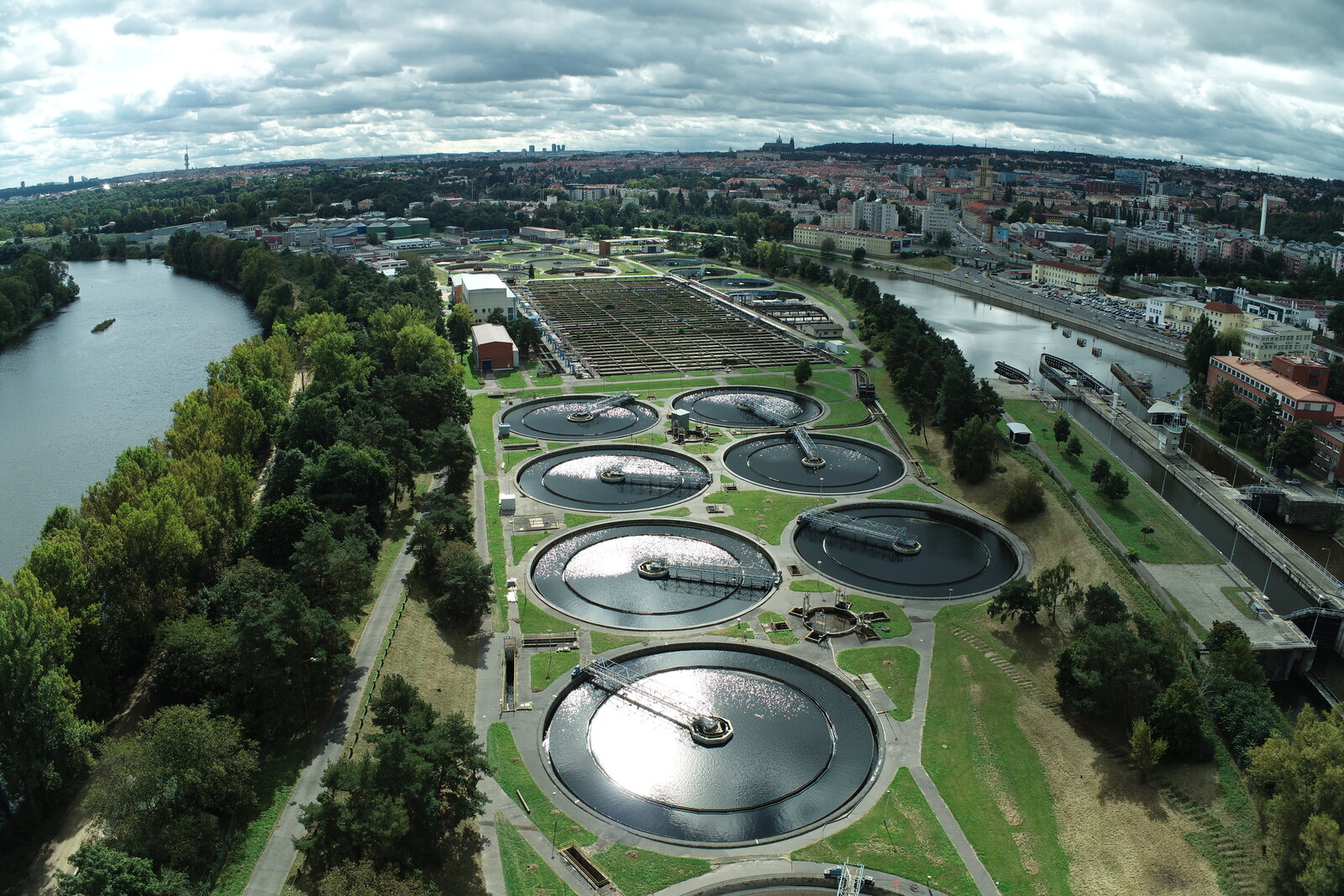
Wastewater treatment plant
Wastewater treatment plants
The most widespread diffuse source. PFAS from households – cosmetics, textiles, cleaning products – pass through treatment plants virtually unchanged. Standard treatment technologies cannot remove them. From the rivers into which WWTPs discharge, PFAS then reach drinking water sources downstream.
Industrial plant
Industrial plants
Metal finishing, electroplating and chrome plating use PFAS as wetting agents and mist suppressants. These operations create point sources of pollution – concentrated contamination of surface and groundwater in the surrounding area. Historical contamination from earlier operations persists in the soil for decades.
Airport
Airports and military bases
AFFF firefighting foams containing PFOS and PFOA were used at airports and military bases for decades during both drills and emergencies, so the substances reached deep into the soil and groundwater. Remediation around airports is extremely expensive and takes years.
Landfill
Landfills
Municipal and industrial waste landfills are a long-term source of PFAS. Products containing these substances – packaging, textiles, electronics – break down at landfills and PFAS leach into seepage water. These can contaminate groundwater over a wide area, especially around older landfills without adequate liners.

⚕️
Health risks

Effects of PFAS on human health

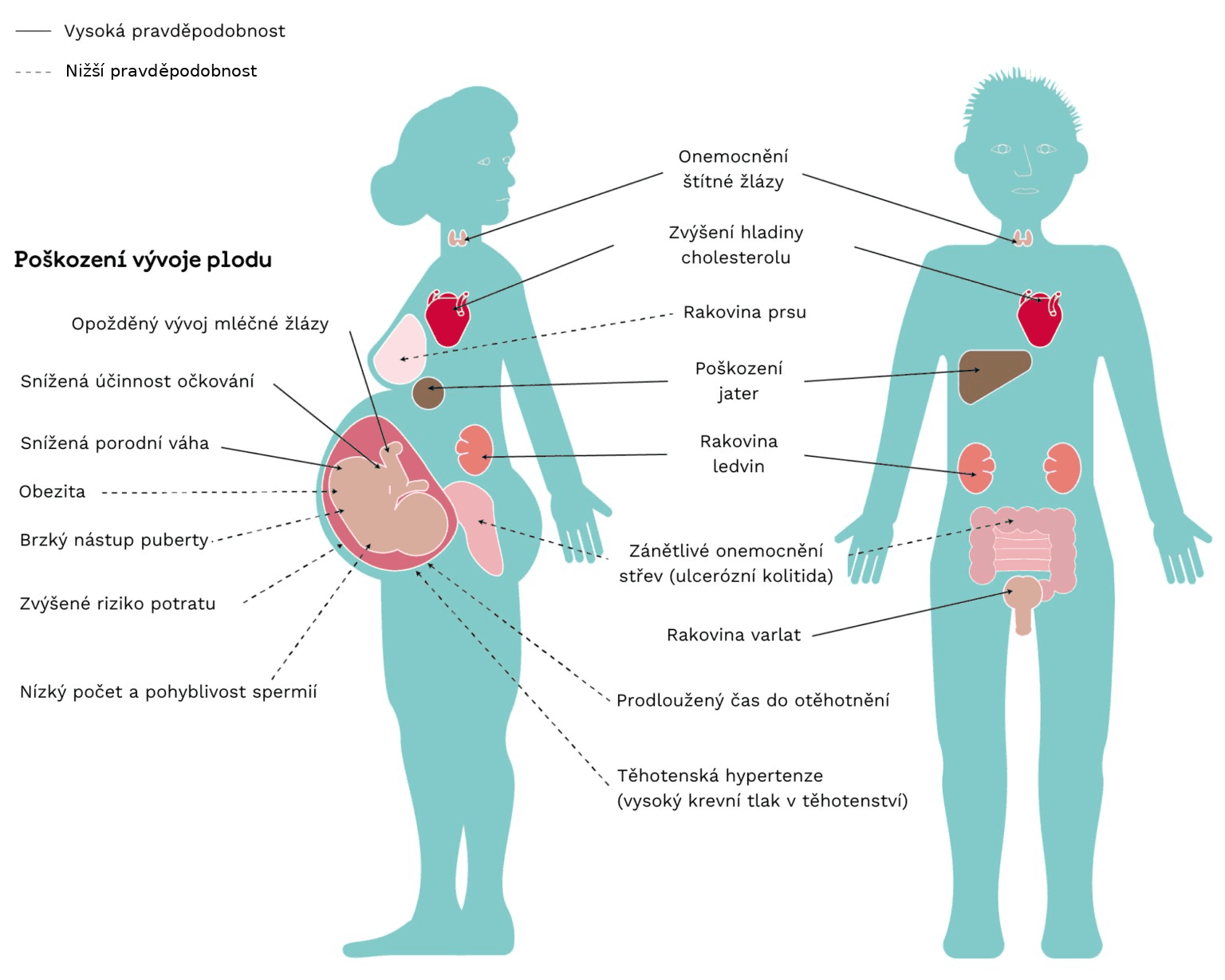
PFAS accumulate in the body for decades and are linked to cancer of the kidneys, testicles and breasts, liver and thyroid damage, higher cholesterol, weakened immunity and reduced fertility. Pregnant women and children are especially sensitive – PFAS cross the placenta and pass into breast milk, affecting fetal development. The International Agency for Research on Cancer (IARC) has classified PFOA as a proven human carcinogen.

Diagram of PFAS effects on human health – organs and body systems affected by PFAS

Source: European Environment Agency, Emerging chemical risks in Europe — "PFAS" eea.europa.eu

Forever chemistry on your plate – Nedej se! (Czech TV)
Forever chemistry on your plate Documentary from the Nedej se! series · Czech Television (in Czech) Watch on ČT →

🛡️
Prevention

How to reduce PFAS exposure

PFAS cannot be avoided entirely, but there are concrete ways to substantially reduce this chemical burden – by adjusting your diet, your household routine and your product choices.

Risky foods

Some foods accumulate PFAS more than others. Pay the most attention to freshwater fish from rivers and to livers of farm animals.

🐟
Freshwater fish from riversHighest risk. PFAS concentrate in fish flesh, especially in rivers near industrial areas.
🫀
Livers and offalThe liver filters PFAS – it therefore has some of the highest concentrations in the animal's body.
🥚
Eggs from backyard hensFree-range hens may eat from contaminated soil or water.
🥬
Vegetables grown on contaminated soilLower risk, but watch out for areas near industrial sites and airports.

Household products with PFAS

Look for the "PFAS-free" label and avoid products marketed as "water/oil resistant" without further specification.

🍳
Non-stick cookwareTeflon pans, baking molds, baking paper.
📦
Food packagingTea bags, pizza boxes, popcorn bags, paper coffee cups, fast-food wrappers.
🧥
Outdoor clothing and gearWaterproof membranes (Gore-Tex etc.), fluorinated ski waxes, shoe impregnation sprays.
🧴
CosmeticsWaterproof makeup, mascaras, dental floss with PTFE.
More details about food Click to see an overview of food categories with higher and lower PFAS content.
🥗
Detailed food overview

Which foods contain the most PFAS?

Long-chain PFAS accumulate mainly in animal tissues, while short-chain PFAS enter plants through water. That is why the risk differs by type of food.

Accumulate in animal tissues

They bind to proteins in blood and liver, are poorly excreted and concentrate in the food chain mainly in aquatic animals and offal. This is exactly the group EFSA monitors with the group limit of 4.4 ng/kg/week.

PFOA PFOS PFNA PFHxS PFDA
Mobile in water, more common in plants

They do not accumulate in animals but in plants, and they are extremely mobile in the environment. Via groundwater and irrigation they reach fields, from which plants take them up through roots and store them in leaves and fruit. TFA also forms from some PFAS pesticides and refrigerants.

PFBA PFBS PFHxA PFPeA TFA
⚠️
Higher PFAS accumulation
Foods with the highest content
🐟
Freshwater fish from rivers Long-chain PFAS
Trout, pike, pikeperch or carp from rivers near industry and airports. Bioaccumulation of PFOS and PFOA in fish flesh tends to be markedly higher than in most other foods.
🫀
Liver and offal Long-chain PFAS
PFOS in beef liver is often many times higher than in muscle. This also applies to kidneys, liverwurst and pâtés.
🦐
Seafood Long-chain PFAS
Shrimp, mussels and crabs filter water and readily concentrate PFAS from the surrounding environment.
🥚
Eggs from backyard hens Long-chain PFAS
Free-range hens take in PFAS from soil, earthworms and water. In industrial farms the values tend to be lower.
🥬
Leafy vegetables Short-chain PFAS
Lettuce, spinach, kale or arugula. Short-chain PFAS travel into leaves more easily than into fruits and roots.
🍷
Conventional wine Short-chain PFAS
Grapevines can accumulate TFA from soil and atmospheric deposition, which is why European measurements show high values in wines in particular.
🌾
Wheat grains and cereal products Short-chain PFAS
Wheat bread, pasta, flour, breakfast cereals. Average TFA ~92 µg/kg in wheat products, peaks up to 360 µg/kg (PAN Europe 2025) – the highest values among cereals, the cross-study average was 107× higher than in tap water.
🍓
Thin-skinned fruit Short-chain PFAS
Strawberries, raspberries, grapes and peaches are more sensitive to residues from sprays and water.
Lower PFAS content
Foods with lower content
🌽
Non-wheat grains Low
Oats, rye, corn and rice have on average roughly 7–8× lower TFA content than wheat products (~12 µg/kg vs. ~92 µg/kg). A good choice for those who want to limit TFA intake from cereals.
🥕
Root vegetables Low
Carrots, celery, beets, radishes or potatoes tend to have lower values on average than leafy vegetables (substantially lower for long-chain PFAS, partly lower for TFA than in leaves or fleshy fruits).
🥛
Milk and standard dairy products Low
Conventional milk, yoghurts and cheeses from large-scale farms usually contain only trace amounts of PFAS. Higher risk applies mainly to farms in contaminated areas.
🥩
Muscle meat of beef / pork / poultry Low
Muscle alone contains an order of magnitude less PFAS than the offal of the same animal. Generally low TFA values.
Note on Czech legislation: The EU does not yet set maximum limits for short-chain PFAS in foods. It only sets a limit in animal-origin foods for 4 specific long-chain PFAS. In practice this means a part of prevention remains with the consumer: it helps to watch the origin and prefer organic foods for sensitive categories. Czech foods often have lower PFAS content than foreign ones thanks to lower values in water and soil.

🔬
New research

Can oats help reduce PFAS in the body?

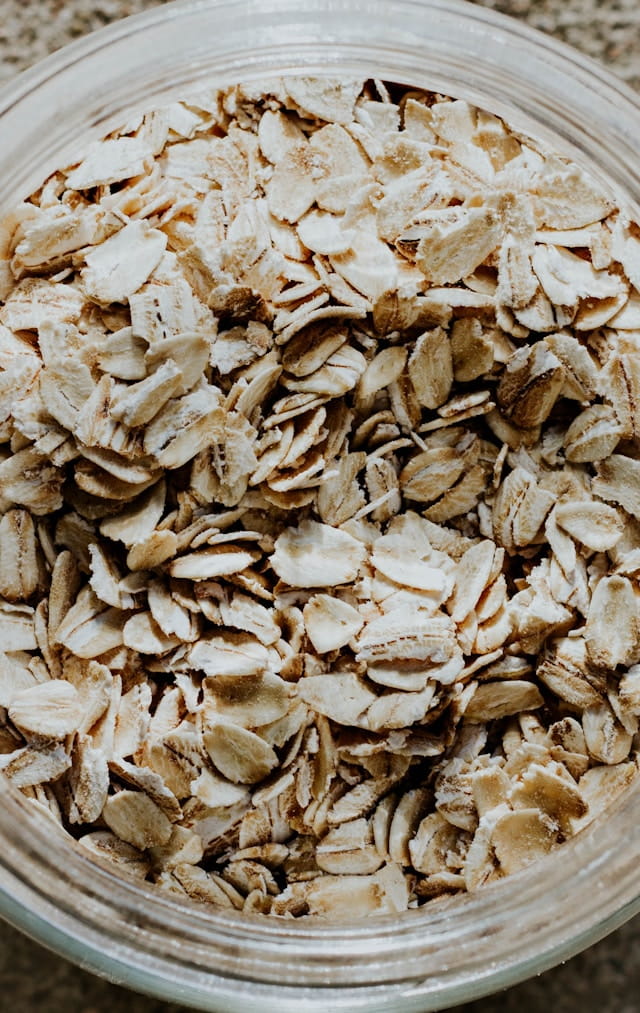
Studies since 2025 suggest that oat beta-glucan – the soluble fiber from oats – may help reduce PFAS levels in the body by binding bile acids and interrupting their recycling through the gut.

Oat flakes – a source of beta-glucan
🐭
Mouse study (2024)
Mice fed a diet enriched with oat beta-glucan showed higher excretion of long-chain PFAS in feces and lower accumulation in liver and serum compared with the control group.
Open study (PubMed) →
🩺
Human studies (2025)
In participants who took oat beta-glucan to lower cholesterol, a simultaneous decrease in serum levels of several long-chain PFAS compounds was observed.
Open study (PMC) →
How does it work? PFAS do not leave the body in one go – they are recycled through the enterohepatic circulation: the liver excretes them into bile, but the intestine reabsorbs them from the bile back into the blood. Oat beta-glucan binds bile acids and carries them out in the stool, which interrupts this recirculation and a larger share of PFAS leaves the body instead of being reabsorbed.
⚠️ This is a new field of research. The data are promising but limited to small studies and help only with long-chain PFAS. As a supplementary measure, however, natural sources of beta-glucan can easily be added to a normal diet: oat flakes, porridge, oat bran. Another effective option is to supplement with oat beta-glucan.

💧
Water filtration

How to remove PFAS from drinking water

Not every filtration technology is equally effective against PFAS. The type of filter and its certification are key – common jug filters and boiling water do not remove PFAS.

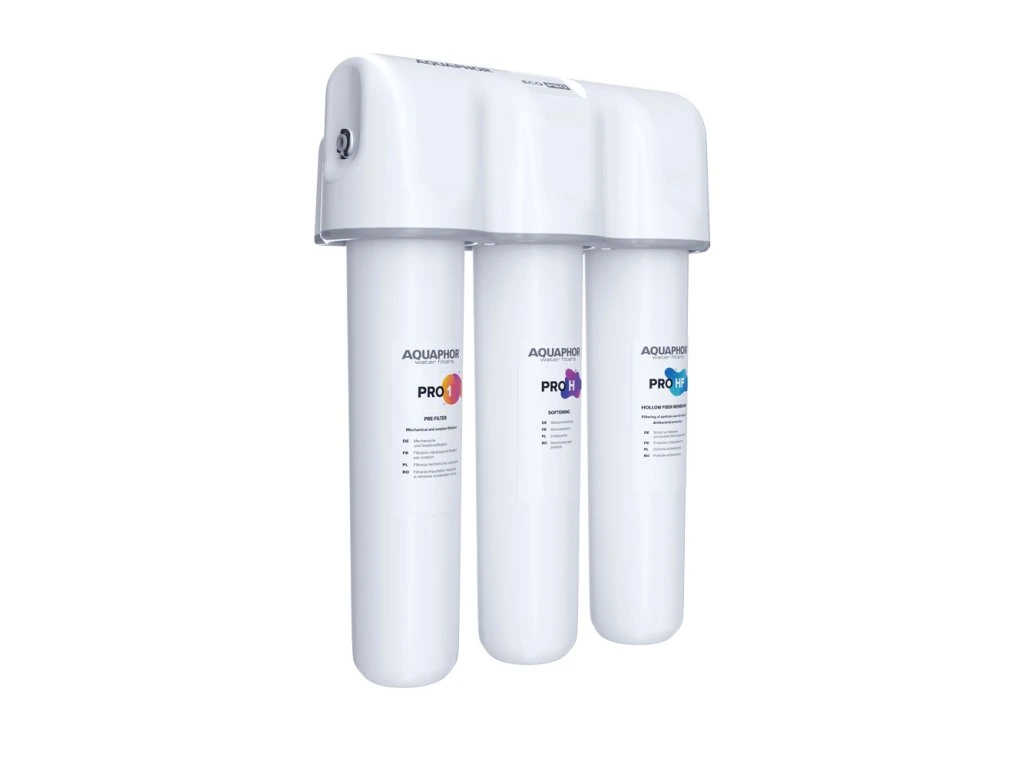
Ion exchange filtration system
Ion exchange resins
85–99 % efficiency
A newer technology specifically designed for PFAS removal. The key is to choose an anion exchanger specific to PFAS – common ion exchangers designed for nitrates or water softening will not reliably remove PFAS. These resins are highly effective even on short-chain PFAS, where activated carbon falls short. In combination with activated carbon they cover the full PFAS spectrum while preserving minerals in the water.
Certification: NSF/ANSI 53 or proprietary (always with a PFAS declaration) · Placement: Under-sink or whole-house ·
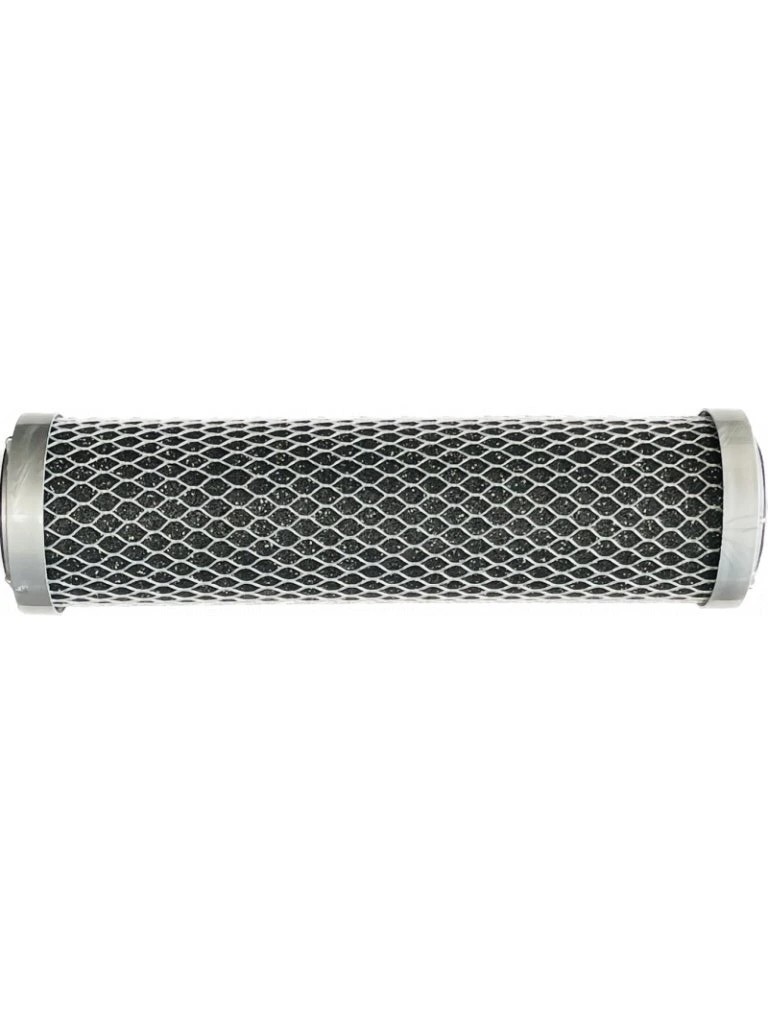
Activated carbon filter cartridge
Activated carbon (GAC / carbon block)
Effective against the most harmful
Effective against the most harmful long-chain PFAS such as PFOA, PFOS and PFNA, but significantly less effective for short-chain compounds. A carbon block is more effective than granular activated carbon (GAC) thanks to longer contact time. Always require PFAS-specific certification.
Certification: NSF/ANSI 53 (with PFOA/PFOS specification) · Placement: Under-sink or on the faucet · Note: Regular filter replacement is critical – a clogged filter can release previously captured substances back into the water.
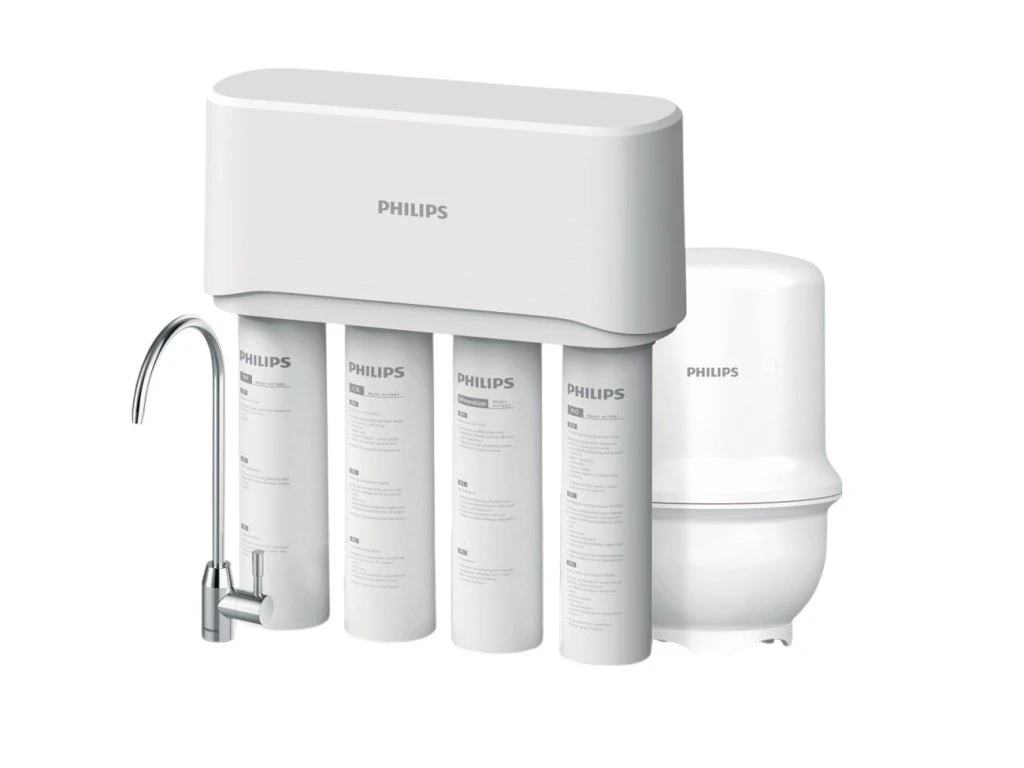
Under-sink reverse osmosis system
Reverse osmosis (RO)
Mineral-poor water
Very effective membrane filtration for the full spectrum of PFAS. Captures 90–99 % of all types including short-chain compounds (GenX, PFBS) that other technologies cannot handle. The system is installed under the sink and filters water at the point of use. The drawback is that RO also strips minerals from water – even with a subsequent remineralization stage the water remains mineral-poor and does not match the profile of natural drinking water (zdroj SZÚ).
Certification: NSF/ANSI 58 · Placement: Under-sink (point-of-use) · Note: Produces waste water (ratio about 1:2), membrane replacement needed 1–2× per year.
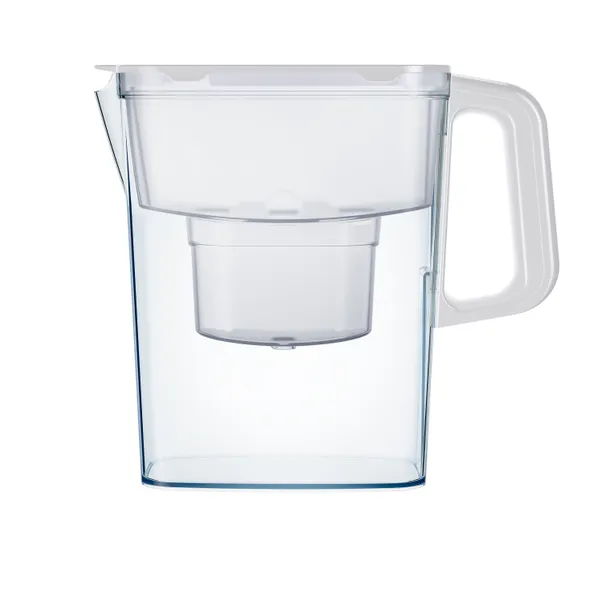
Water jug filter
What does NOT remove PFAS
Ineffective
Boiling water does not remove PFAS – on the contrary, evaporation increases their concentration. Standard jug filters (without NSF/ANSI 53 certification for PFAS) are also ineffective. Filters certified only to NSF/ANSI 42 (taste and odor) will not capture PFAS. Distillation removes up to 99 % of PFAS but is energy-intensive and slow.
Standard jugs: Ineffective without certification · UV disinfection: Ineffective against PFAS · Distillation: Effective but impractical for everyday use.

Comparison of filtration technologies

An overview of the effectiveness of each method by PFAS type and practical parameters for home use.

Technology Long-chain PFAS Short-chain PFAS Mineral retention Maintenance
Ion exchange resins (PFAS-specific) 85–99 % 85–99 % Yes Cartridge replacement by capacity
Activated carbon 70–95 % 10–50 % Yes Filter replacement per manufacturer
Reverse osmosis 90–99 % 90–99 % No (only partly with remineralization) Membrane replacement 1–2× per year
Standard jug filters 0–20 % 0–5 % Partly (reduces calcium/magnesium) Cartridge replacement monthly
Boiling water 0 % 0 % Yes
💡
How to choose the right filter? Always verify that the filter holds NSF/ANSI 53 (carbon / ion exchange) or NSF/ANSI 58 (reverse osmosis) certification with a specific declaration for PFOA and PFOS. Filters without this certification may not remove PFAS at all. For maximum protection we recommend a combination of activated carbon and a PFAS-specific ion exchange resin – it covers the full PFAS spectrum including short-chain compounds while preserving minerals in the water.
⭐ Our filter pick

LaVie OPROPRE

An under-sink filter that combines both of the most effective technologies in a single cartridge – activated carbon and ion exchange – so it covers both long- and short-chain PFAS while preserving the minerals in your water.

🧪 Activated carbon + ion exchange

Activated carbon (250 g) captures microplastics and long-chain PFAS, while the anion exchange resin (70 g) also covers short-chain compounds.

🔬 Effectiveness confirmed by 2 independent labs

Verified even on short-chain PFAS:

  • Laboratoire de Chimie de l'Environnement (LCE) – CNRS UMR 7376 / Aix-Marseille Université
  • TZW Karlsruhe (Germany) – laboratory accredited to ISO 17025
📊 Measured removal rates

TFA 99.9% PFOA 60–80% PFBA 60–80%

TFA measured at a realistic concentration (160 µg/L, TZW); PFOA and PFBA at a high stress concentration (1 mg/L, CNRS/AMU).
French manufacturer, NSF/ANSI 61 certified

Designed and assembled in France (Lambesc, Bouches-du-Rhône). Materials in contact with drinking water are certified to NSF/ANSI 61 (health safety).

€159 €151 complete kit after the 5% discount with code BEZPFAS
Buy the Opropre filter discount code bezpfas = −5%
Michal Zatloukal
A note from the author

If you have a question, write to me.

I run this site myself in my free time. If you have any questions – get in touch.
I'll reply personally.

michal@bezpfas.cz
— Michal